
 Australia
 New Zealand
 Malaysia
 Thailand

Element Nova Range: Interactive Kiosk Hardware
The Importance of Unobtrusive Self-Service Hardware
August, 3, 2026
The Kiosk That Disappears
What the right self-service hardware actually does - and why most people never notice.
You have stood in front of one of these screens. You know the feeling when it goes wrong: the tap that doesn't register, the interface that loads half a beat too slow, the payment terminal that sits at the wrong angle so you have to crane your neck to read the prompts.
You don’t call it a technology failure. You just call it annoying. You might not go back.
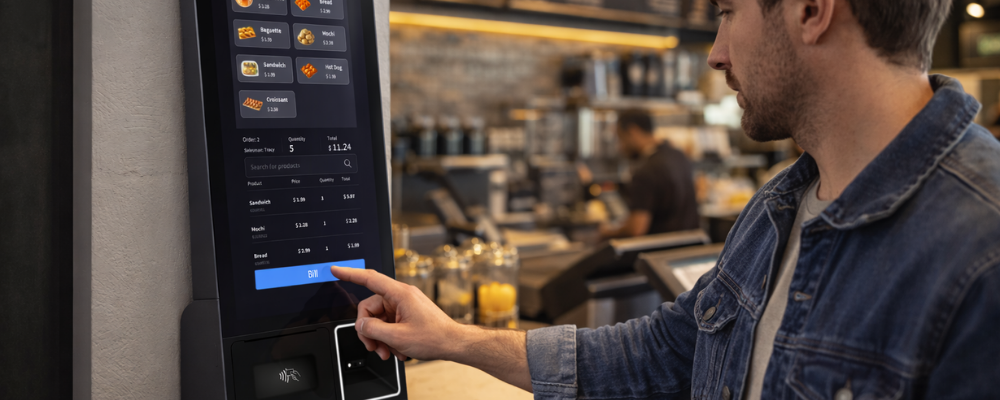
You also know the feeling when it goes right. The screen is exactly where it should be. The touch responds the moment your finger lands. You scan, you pay, you leave.
You didn’t think about the hardware once. That’s not an accident. That’s design.
Self-service has a visibility problem. Not the kind that needs fixing - the kind worth protecting.
How Effective Kiosks Enhance Customer and Staff Satisfaction
When a kiosk works well, customers don’t talk about it. They talk about how quickly they got their food. They talk about how the queue moved. They describe the store as calm, well-run, efficient.
The hardware has done something remarkable: it has taken itself out of the conversation entirely. It has become the counter, the till, the menu board - so familiar and so right that it vanishes into the environment it was built to serve.
When a kiosk doesn’t work well, the opposite happens. The hardware becomes the entire experience. The customer isn’t ordering - they’re troubleshooting. And somewhere nearby, a staff member has been pulled away from something else to apologise for a screen that should never have needed an apology.
The Kiosk That Disappears
A Range Built Around That Standard.
The 2026 Element Kiosk Catalogue introduces the Nova range. It is a family of self-service kiosks for retail, QSR, hospitality, and healthcare.
It is built for places where every interaction counts. What distinguishes the range isn’t any single specification. It’s what those specifications are in service of.
Take the Nova 800: a 27-inch premium self-ordering kiosk built for high-traffic environments. The True-Flat PCAP touchscreen - 1920 × 1080 Full HD - isn’t large because large is impressive. It’s large because QSR customers at peak times need to read the menu, customise their order, and confirm payment.
They should do this without leaning in or squinting.The display earns its size by making that moment feel effortless. Powered by Intel® Alder Lake-N or Meteor Lake Core Ultra processors, the Nova 800 handles ordering, payment, loyalty, and promotional content without hesitation - because hesitation, at that edge, is the thing that breaks trust.
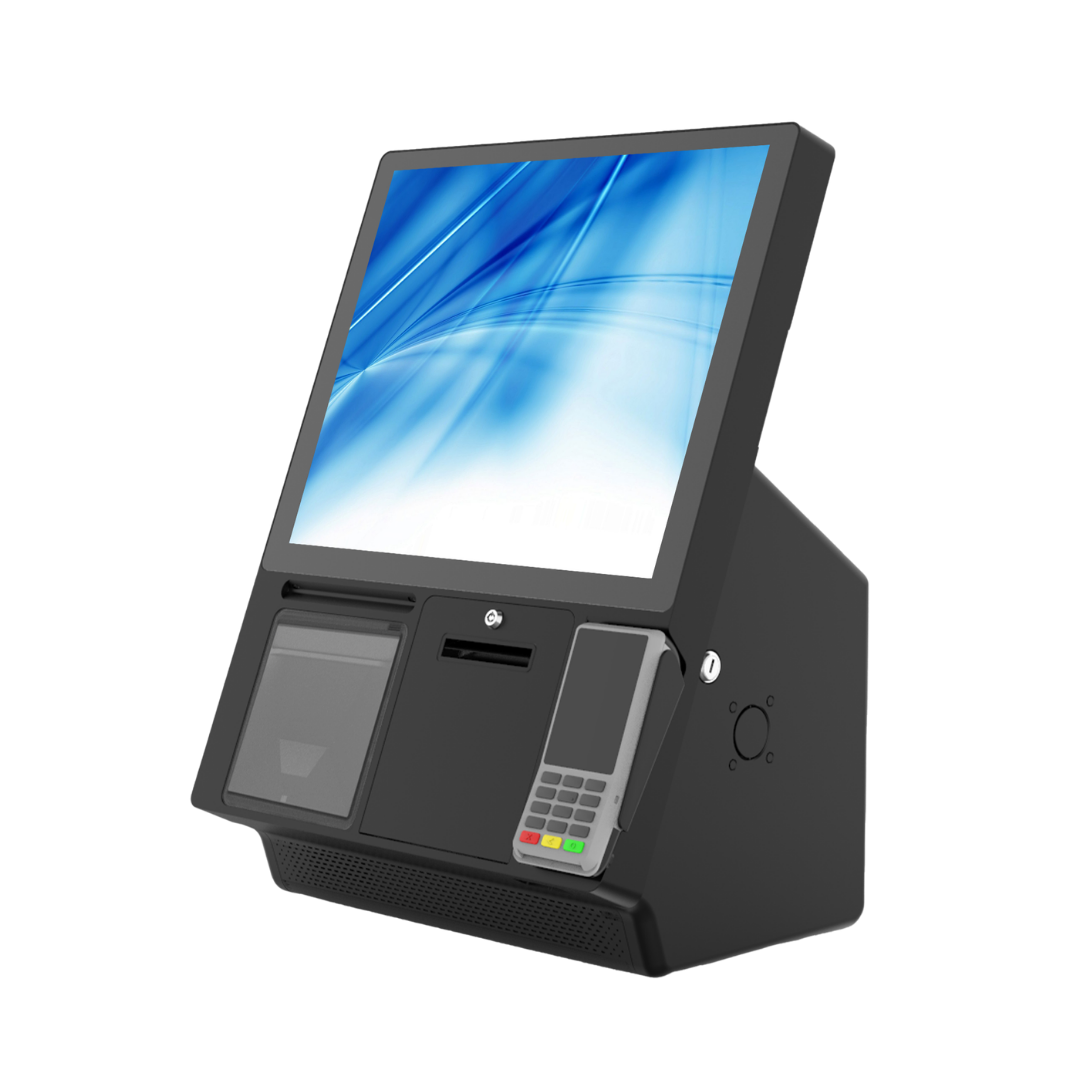
The Nova 300 takes a different brief: a compact 19-inch self-checkout kiosk for modern retail, convenience, and hospitality. Where the 800 commands space, the 300 disappears into it. Its front-serviceable motherboard box is the kind of detail you only include if you’ve stood in a store at 6pm on a Friday, watching a queue build while someone tries to fix a machine from the back.
Front access means faster service. Faster service means less doubt. Less doubt means customers come back.
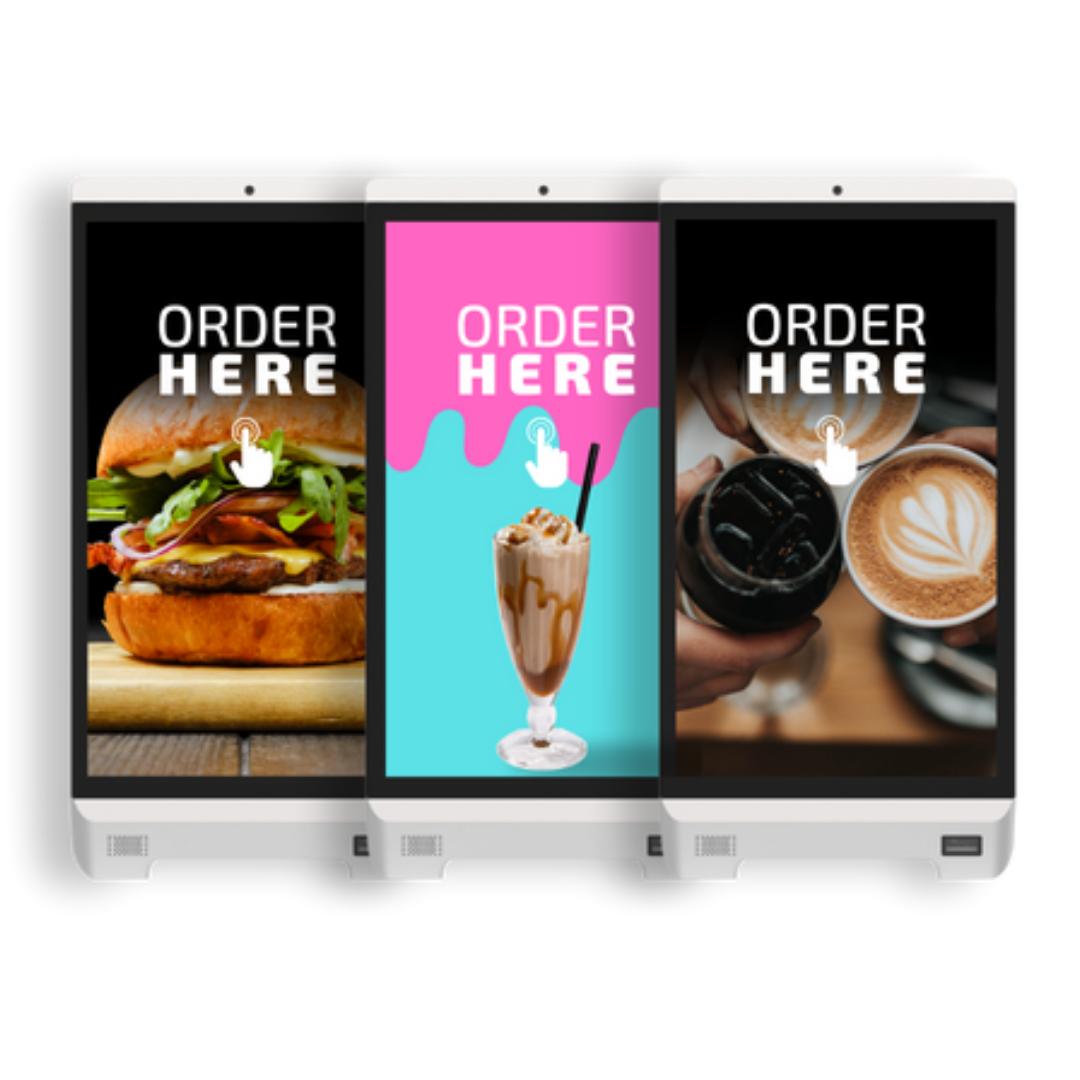
The Nova 500 - a 21.5-inch panel PC with a slim 40mm profile - is built for the wall and the counter alike: retail, QSR, healthcare, wherever a kiosk needs to serve without dominating. The Nova 700 is the modular answer for retailers who need to configure differently across store formats - express SCO, full-service, hybrid attended. The Nova 900 is engineered for the full-service grocery checkout, supporting scanners, scales, and the full weight of a high-volume environment without flinching.
Across the range, the pattern holds: Intel-powered performance designed for responsiveness under real-world load; PCAP multi-touch that registers on first contact; flexible mounting - floor, wall, countertop - because the right kiosk in the wrong position is still the wrong kiosk; and peripheral ecosystems - scanners, payment terminals, printers, cameras - that integrate rather than compromise.
Operational Efficiency and Staff Usability
The Staff Member at Hour Ten.
There is another person in this story, and the catalogue doesn’t let you forget them.
Every Nova in the range is built with service access in mind. Front-accessible components.
Modular architecture. Mounting options designed around real deployment constraints, not ideal ones. This is the language of hardware built for people who have to maintain it under pressure, in stores that do not stop trading so that a technician can work comfortably.
If the staff experience is stressful, the customer feels it. If the staff experience is calm, the customer trusts it. A kiosk that goes down and stays down is not a hardware problem in isolation - it is a queue that builds, a staff member who is now troubleshooting instead of serving, a customer who notices that something has gone wrong even if they can’t say what.
Reliability and serviceability are not maintenance specifications. They are customer experience specifications
Matching Hardware Options to Specific Environments
Not Every Kiosk Is Right for Every Environment.
The catalogue’s Kiosk Selection Matrix is one of the most honest things in it. Ten products across two pages. Screen sizes from 15 inches to 27. Android or Windows or Linux, depending on what the operation demands.
External payment terminals or built-in NFC SoftPOS. Countertop, floor-standing, or wall-mounted.
The range exists because different edges are different. A compact convenience store checkout and a flagship QSR ordering station are not the same problem. Forcing the same solution onto both of them is not efficiency - it’s compromise.
The Nova 200, for example, is purpose-built for compact environments: a 15-inch true-flat PCAP display, integrated 1D/2D barcode scanner, front-access design, and support for Windows, Linux, or Android. It is not trying to be the Nova 800. It is trying to be exactly right for a tight counter, a convenience store, a small-format hybrid checkout - and in those environments, exactly right is worth considerably more than feature-rich.
Final Impressions and Brand Loyalty
The Transaction Is the Final Impression.
Customers don’t separate experience from the screen they interact with. Every tap, every moment of waiting, every payment prompt is a point of acceptance - not just of a card, but of a brand. If that screen feels intentional, the whole store feels intentional. If it doesn’t, the doubt spreads quietly backwards through everything the customer thought they liked about the place.
Design helps customers move without thinking. Quality helps staff deliver without apologising. Purpose helps everything behave exactly as expected. The 2026 Element Kiosk Catalogue is built around that sequence - applied across every screen size, every mounting option, every environment that deserves hardware built to disappear.